Rehabilitation Program for Children with Dyslexia: Scientific Multidisciplinary Approach
Understanding Learning Differences: Dyslexia, Dyspraxia, Dysphasia
Learning differences encompass several neurodevelopmental challenges that affect your child's learning:
Specific learning difficulty with reading. Children may reverse letters (b/d, p/q), confuse similar sounds, read slowly and with effort, and struggle to memorize spelling.
Motor coordination disorder. Children may be clumsy, have difficulties with writing (dysgraphia), cutting, sports, and spatial organization.
Oral language development disorder. Children may struggle to express themselves clearly, construct sentences, find words, or understand complex instructions.
The Links Between Motor Skills, Listening, and Learning
Neuroscience research demonstrates that these conditions are not isolated. They reflect complex neurodevelopmental organization involving:
- The vestibular system (balance and coordination)
- Central auditory processing (speech sound discrimination)
- Sensorimotor integration (brain-body coordination)
- The neurometabolic environment (nutrition and brain function)
This is why a comprehensive, integrative approach delivers significantly better results than isolated interventions.
Our Scientific Approach Based on Neuroplasticity
Our program builds on recent advances in neuroscience, particularly the concept of neuroplasticity: the brain's ability to reorganize itself and create new neural connections throughout life.
Neural Synchronization: The Scientific Foundation of Our Approach
Professor Giselher Schalow's work on neural network self-organization has demonstrated that:
- Phase/frequency coordination between neurons is essential to central nervous system organization
- Coordinated rhythmic movements of all four limbs simultaneously stimulate multiple brain regions
- Repetition of precise motor patterns promotes inter-hemispheric synchronization, crucial for reading and writing
- Coordinated sensory inputs (auditory, proprioceptive, vestibular) enhance neural plasticity
Scientific reference: Schalow G. "Scientific Foundations of the GIGER MD Medical Device", Combo Ltd., 2021. Human neurophysiological studies show that self-organization of spinal premotor oscillators and coordination between motor neurons and afferents can be restored through repetitive coordinated movements.
The 3 Pillars of Our Multidisciplinary Program
Our approach combines three complementary methods that work synergistically to optimize your child's neurological development.
1️⃣ Giger MD® Therapy: Reorganizing Brain-Body Connections
What Is It?
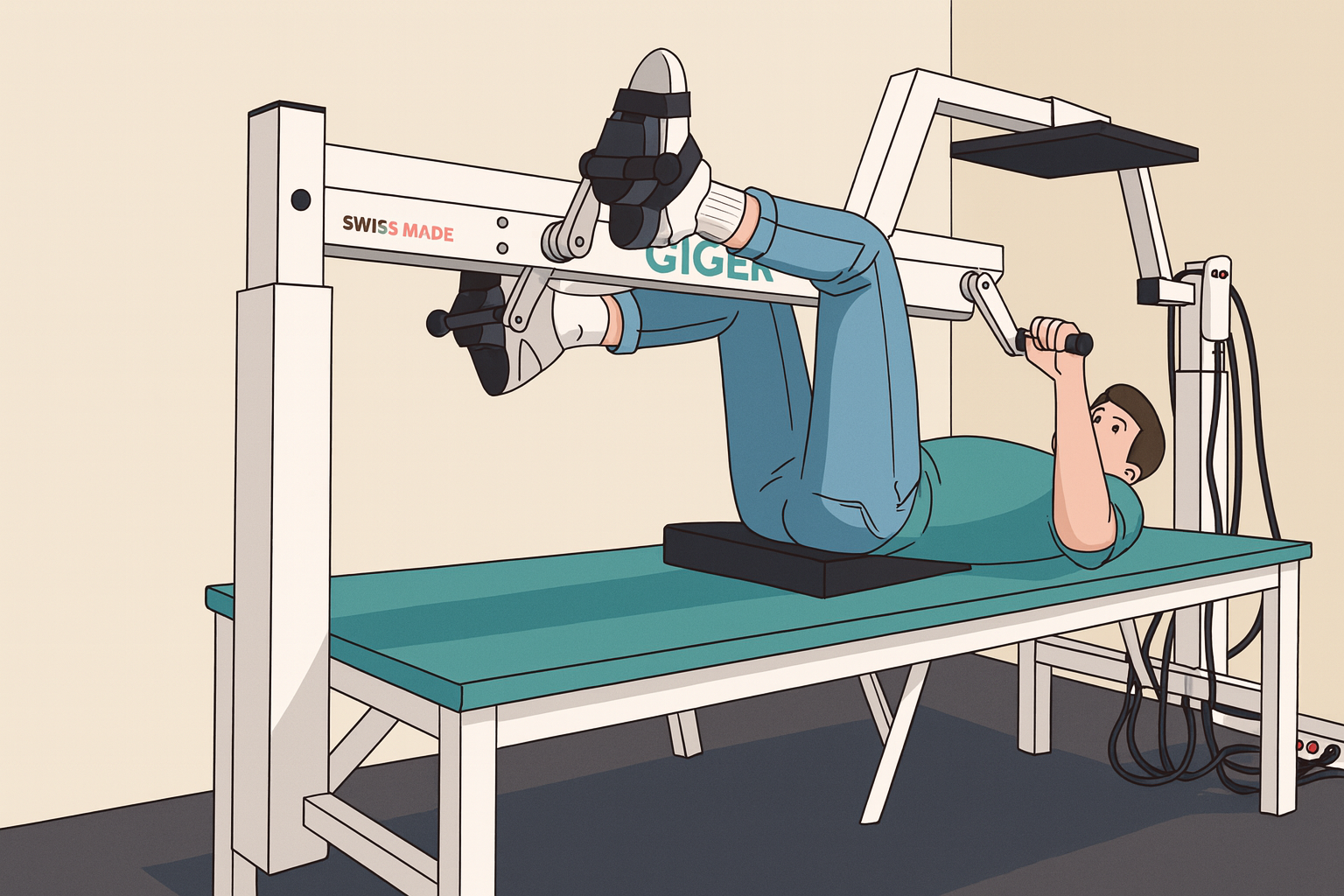
Giger MD® is a certified medical device that enables intensive neuromotor rehabilitation through rhythmic, cross-pattern movements of all four limbs (arms, legs, trunk) in a reclined position.
How Does It Work?
The child lies comfortably and performs coordinated pedaling movements with hands and feet. The device ensures millisecond-precise coordination between movements, which is impossible to replicate manually.
This sensorimotor stimulation simultaneously activates:
- The cerebellum (fine motor coordination, movement automation)
- The brainstem (postural regulation, balance)
- Spinal locomotor centers (movement patterns)
- The motor cortex (planning and execution of voluntary movements)
📋 Detailed Protocol
✓ Frequency: Once per week
✓ Complete program: 9 sessions (9 weeks)
✓ Minimum age: 6 years
✓ Location: Activate® Center, Geneva
✓ Coverage: Covered by LAMal (Swiss mandatory basic health insurance)
Observed Results
From the first few sessions (4-5 sessions), parents and teachers often notice:
- Improved overall coordination and balance
- Better posture at school and while writing
- Smoother handwriting (less laborious writing)
- Increased concentration in class
- Reduced fatigue during schoolwork
- Improved lateralization (left/right distinction)
"After just 5 Giger MD sessions, Clara gained confidence. She actively participates in class, asks questions, and seeks help from adults when needed. Her school results have improved significantly, particularly in reading and writing." — Parent, Geneva
Scientific Basis
Published clinical studies show that Giger MD therapy enables significant improvement in integrated CNS functions in children with neurodevelopmental disorders, including dyspraxia and motor coordination disorders often associated with dyslexia.
Reference: "Rehabilitation approach using the GIGER MD device in children with neurogenic conditions", Frontiers in Neurology, 2023. The study demonstrates that coordinated rhythmic movements stimulate neuroplasticity and reorganization of damaged or underdeveloped neural networks.
2️⃣ Audio-Psycho-Phonology: Retraining Listening and Language
What Is It?
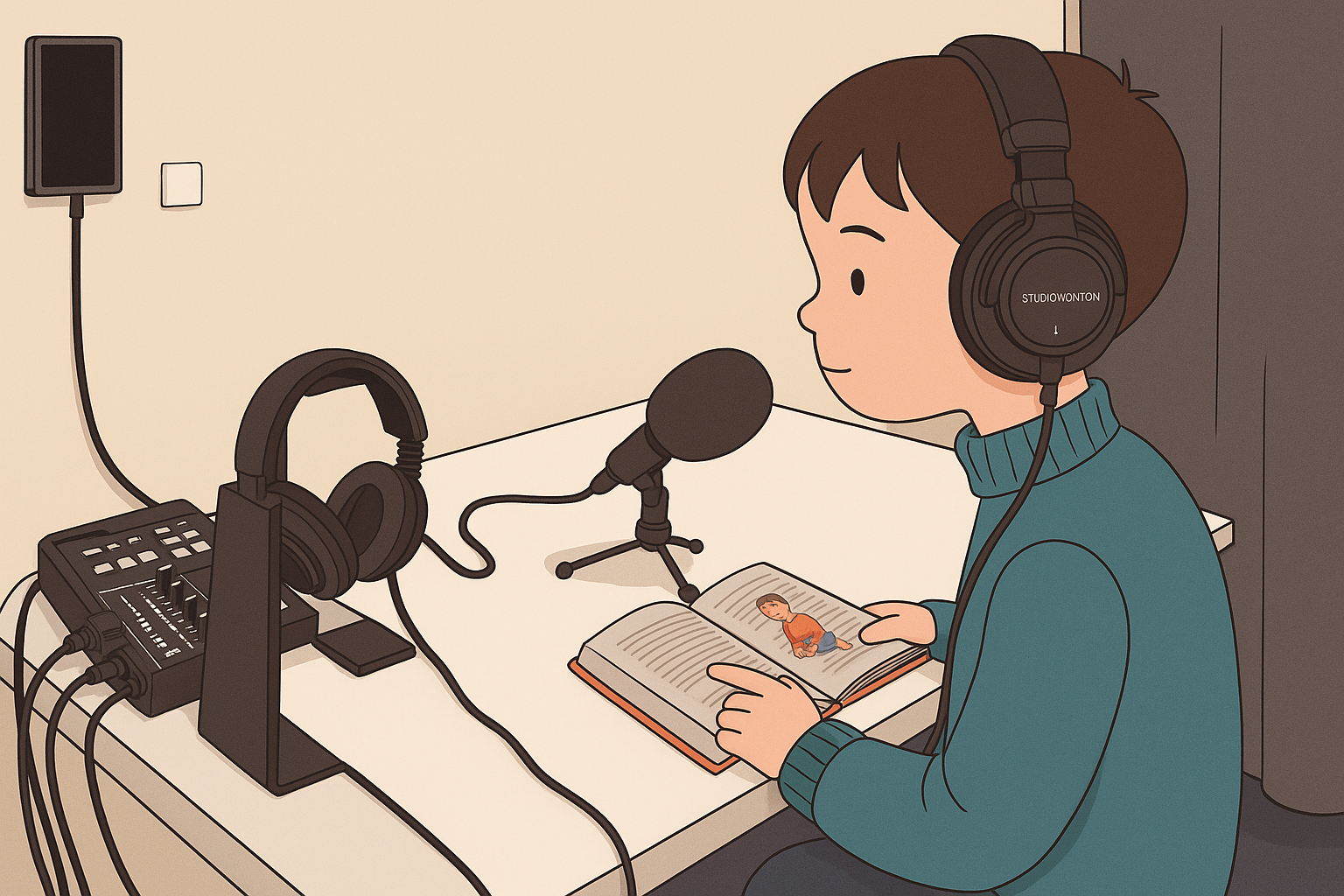
Audio-psycho-phonology is an auditory stimulation method based on Dr. Alfred Tomatis's research. It uses filtered music (primarily Mozart) delivered through a special headset with bone and air conduction. Audio-vocal training is also implemented to improve reading.
Why Is This Important for Dyslexia?
Recent research shows that many children with dyslexia exhibit:
- Insufficient auditory discrimination of similar phonemes (p/b, t/d, f/v)
- Unestablished auditory lateralization (unclear dominant ear)
- Slower processing of auditory information
- Weak phonological awareness (difficulty segmenting words into sounds)
Audio-psycho-phonology targets these deficits by retraining the auditory system to process sounds more efficiently.
How Does It Work?
The program uses:
- Filtered music: frequencies are electronically modulated to specifically stimulate deficient auditory areas
- Sound gating: amplification of high frequencies and reduction of low frequencies based on the dynamic intensity of the music to engage attention mechanisms
- Lateralization: progressive shift to the right ear to establish lateralization toward the language area located in the left hemisphere, specialized in linguistic processing
- High-pass filters: emphasis on mid-range frequencies (consonant range) to improve phonemic discrimination
- Bone conduction: direct stimulation of the inner ear through skull bones, activating the vestibular system (balance and coordination)
📋 Complete Protocol
✓ Duration: 1.5 hours
✓ Cost: CHF 130
✓ Includes: listening test, specific dyslexia questionnaire, needs evaluation
✓ 3 intensive sessions of 10 consecutive days each
✓ 1 hour of listening per day with headphones
✓ 1-month break between each intensive (integration period)
✓ Total: 30 sessions spread over approximately 3 months
✓ Before each intensive (to adapt the program)
✓ 2 months after completion (to evaluate lasting progress)
✓ Minimum age: 4 years
✓ Equipment: headset and audio player rental
✓ Coverage: possible through supplementary insurance if done on-site
What Does the Child Do During Listening?
Important: Listening occurs during activities, not while sitting passively. Your child can:
- Do motor activities (drawing, coloring, cutting, playing with modeling clay)
- Play quietly (puzzles, building blocks, fine motor games)
- Rest or simply lie down
- ❌ No screens during listening (television, tablet, computer)
Observed Results
Improvements typically appear after the first intensive session:
After 10 days (1st intensive session):
- Better reading fluency
- Clearer articulation
- Increased auditory attention in class
After the complete program (3 intensive sessions):
- Significant reading improvement (speed and comprehension)
- Better prosody (speech rhythm and intonation)
- Vocabulary enrichment
- Spelling progress
- Increased self-confidence
- Extended concentration
- Improved motor coordination (linked to vestibular system)
Scientific Basis
Recent neuroimaging studies show that auditory interventions can modify neuroplasticity and improve phonological processing in children with dyslexia:
- A study published in Clinical Neurophysiology (2024) demonstrates that vocal music stimulation improves neural responses to speech sound changes in infants at risk for dyslexia
- Research from the University of Helsinki shows that passive listening to filtered music positively influences phonological development
- Studies on assistive listening devices show improved neural encoding stability that translates to better reading skills
Reference: Navarrete-Arroyo S. et al. "Beneficial effects of a music listening intervention on neural speech processing in infants at risk for dyslexia", Clinical Neurophysiology, 2024. The study demonstrates that even passive listening to vocal music can improve early phonological processing.
3️⃣ Functional Medicine: Optimizing the Neurometabolic Environment
Why Is the Nutritional Approach Important?
Many children with learning differences have an inflammatory or deficient environment that can worsen their difficulties:
- Magnesium deficiency: impairs synaptic transmission and increases fatigue
- Omega-3 (DHA) deficiency: essential for myelination and neuronal membrane fluidity
- Zinc deficiency: impacts neurogenesis and concentration
- B vitamin deficiency: reduces brain cellular energy
- Blood sugar instability: causes fluctuations in attention and energy
Our Simple, Targeted Approach
We do not perform invasive testing. Based on a detailed questionnaire and clinical evaluation, we offer foundational nutritional support tailored to the specific needs of children with learning differences.
Typically Recommended Supplements
→ Improves nerve transmission, reduces fatigue, promotes restorative sleep
🐟 Omega-3 (EPA/DHA)
→ Essential component of neuronal membranes, anti-inflammatory, improves concentration
⚡ B Vitamins (B complex)
→ Cellular energy production, neurotransmitter synthesis, stress management
🔬 Zinc
→ Neurogenesis, cognitive function, attention modulation
Who Supports You?
Nutritional recommendations are formulated by an FMCA-certified health coach (Functional Medicine Coaching Academy), specialized in pediatric functional approaches.
Observed Benefits
Optimizing the metabolic environment often enables:
- Increased energy throughout the day
- Better sustained attention in class
- Improved working memory
- Easier emotional regulation (less irritability, reduced frustration)
- Increased motivation for learning
- Better quality sleep
Scientific Basis
Research in cognitive nutrition demonstrates the direct impact of micronutrients on brain function:
- Magnesium modulates synaptic plasticity and hippocampal neurogenesis
- DHA represents 40% of polyunsaturated fatty acids in the brain and is crucial for myelination
- B vitamins are essential cofactors in neurotransmitter synthesis (dopamine, serotonin, GABA)
The Synergy: Why Combine These 3 Approaches?
Each pillar targets a different but complementary aspect of neurological development:
| Approach | Primary Target | Impact on Dyslexia |
|---|---|---|
| Giger MD® | Neuromotor coordination | Improves posture, writing, lateralization, balance |
| Audio-psycho-phono | Central auditory processing | Improves phonological discrimination, reading, speech |
| Functional med. | Metabolic environment | Optimizes energy, attention, memory, mood |
How Does the Support Process Work? (Patient Journey)
Objective: Assess your child's specific needs
Format: Phone or video call with a therapist
Content: Discussion of observed difficulties, history, goals
No commitment: this consultation does not obligate you in any way
Cost: CHF 130
Content: Listening test, dyslexia questionnaire, auditory evaluation
Result: Personalized recommendations on program duration and type
Weeks 1-9: Giger MD (1 session/week at the center) + Audio-psycho-phonology at home (1st intensive of 10 days)
1-month break: Neurological integration
Continuation: 2nd then 3rd audio intensive with Giger MD in parallel
Nutrition: Supplements started at the beginning of the program
Regular assessments: Before each audio intensive
Final evaluation: 2 months after program completion
Long-term follow-up: Refresher sessions available if needed
📍 Location: Activate® Center, Rue de la Pélisserie 18, 1204 Geneva (Giger MD sessions) + home or on-site (audio-psycho-phonology)
Testimonials and Observed Results
"Clara is achieving excellent grades in all subjects and her progress is impressive! We congratulate her for her results and the determination she has shown this term in all areas. Clara seems to have gained confidence. She actively participates in all lessons, asks questions, and seeks out adults when she needs help." — School report after program, Geneva
📊 Key Figures
Over 70% of children who completed our full program experience lasting improvement in their symptoms, including:
- Improved reading speed and fluency
- Reduced letter reversals
- Better reading comprehension
- More legible handwriting with less fatigue
- Significantly increased self-confidence
- Renewed motivation for school
- Reduced fatigue during homework
Frequently Asked Questions (FAQ)
Audio-psycho-phonology: from age 4
Giger MD: from age 5 (minimum height 1.20m/4ft)
Ideally, start as soon as difficulties are identified, as the young brain has maximum plasticity.
Total duration: 4 to 5 months on average for a complete program
• Giger MD: 9 weeks (9 sessions)
• Audio-psycho-phonology: 3 intensives of 10 days spread over 3 months
• Functional medicine: throughout the program
No, absolutely not. Our approach is complementary to speech therapy, psychological support, or any other care your child already receives.
We work on the neurological foundations (coordination, auditory processing, metabolism), while speech therapy specifically targets written and oral language. Both approaches reinforce each other.
No, our program does not replace speech therapy.
Speech therapy works on reading strategies, spelling, text comprehension, etc.
Our program strengthens the neurological foundations that allow speech therapy to be more effective.
Think of it as building solid foundations on which speech therapy can build more effectively.
Yes:
• Giger MD: covered by LAMal (Switzerland's mandatory basic health insurance)
• Audio-psycho-phonology: possible coverage through supplementary insurance (depending on your policy)
• Nutritional supplements: generally not covered
We recommend checking your coverage before starting the program.
Partially:
• Audio-psycho-phonology: ✅ At home (1 hour/day with rented headset, but no insurance reimbursement in this case)
• Functional medicine: ✅ At home (taking supplements)
• Giger MD: ❌ Requires coming to the center (1x/week)
Since the Giger MD device is specialized medical equipment, sessions must take place at the Activate® Center in Geneva. Audio-psycho-phonology is covered by supplementary insurance when follow-up is done on-site.
Results vary for each child, but our experience shows that:
• Approximately 70% of children experience lasting improvement
• Initial results often appear after 4-5 Giger MD sessions and the first audio-psycho-phonology intensive
• Improvements include: reading, writing, concentration, self-confidence, coordination
• Benefits are lasting over time (several years)
Important: each child progresses at their own pace. Some experience dramatic improvements, others more gradual but equally significant progress.
Yes, absolutely. Our approach is particularly well-suited for children with multiple co-occurring learning differences.
Giger MD specifically addresses motor coordination (dyspraxia), audio-psycho-phonology targets language (dyslexia/dysphasia), and functional medicine optimizes overall nervous system function.
We understand family constraints. Regularity is important to optimize results, but we can adapt the schedule if needed.
Contact us to discuss your specific situation and find the best solution.
Comparison Table: Our Program vs Other Approaches
| Approach | Target | Duration | Coverage |
|---|---|---|---|
| Speech therapy alone | Written/oral language | 1-2 years+ | ✅ Yes (LAMal) |
| Neuropsychology | Cognition, assessment | Variable | ⚠️ Partial |
| ⭐ Our Activate® Program | Neuromotor + Auditory + Metabolic | 4-5 months | ✅ Yes (LAMal + Suppl.) |
Practical Information
Geneva address: Rue de la Pélisserie 18, 1st floor, 1204 Geneva
Lausanne address: Avenue Alexandre Vinet 25, 2nd floor, 1004 Lausanne
Hours: Monday to Friday, by appointment only
Contact: Monday to Friday, 8:30 AM to 6:30 PM
Service area: Geneva, neighboring France, Lausanne and surrounding areas.
Ready to help your child regain confidence?
Over 70% of our young patients rediscover the joy of learning.
Could your child be next?
📞 Book My Free Consultation
✓ No commitment
✓ 30 minutes with a qualified therapist
✓ Personalized assessment of your child's needs
Or call us directly Monday to Friday, 8:30 AM to 6:30 PM at +41 22 577 55 50
Scientific References:
- Schalow G. "Scientific Foundations of the GIGER MD Medical Device", Combo Ltd., 2021
- "Rehabilitation approach using the GIGER MD device in children", Frontiers in Neurology, 2023
- Navarrete-Arroyo S. et al. "Beneficial effects of music listening intervention on neural speech processing in infants at risk for dyslexia", Clinical Neurophysiology, 2024
- Malak R. et al. "The role of Tomatis sound therapy in the treatment of reading difficulties in children with developmental dyslexia", 2017
- Hornickel J. et al. "Assistive listening devices drive neuroplasticity in children with dyslexia", PNAS, 2012